
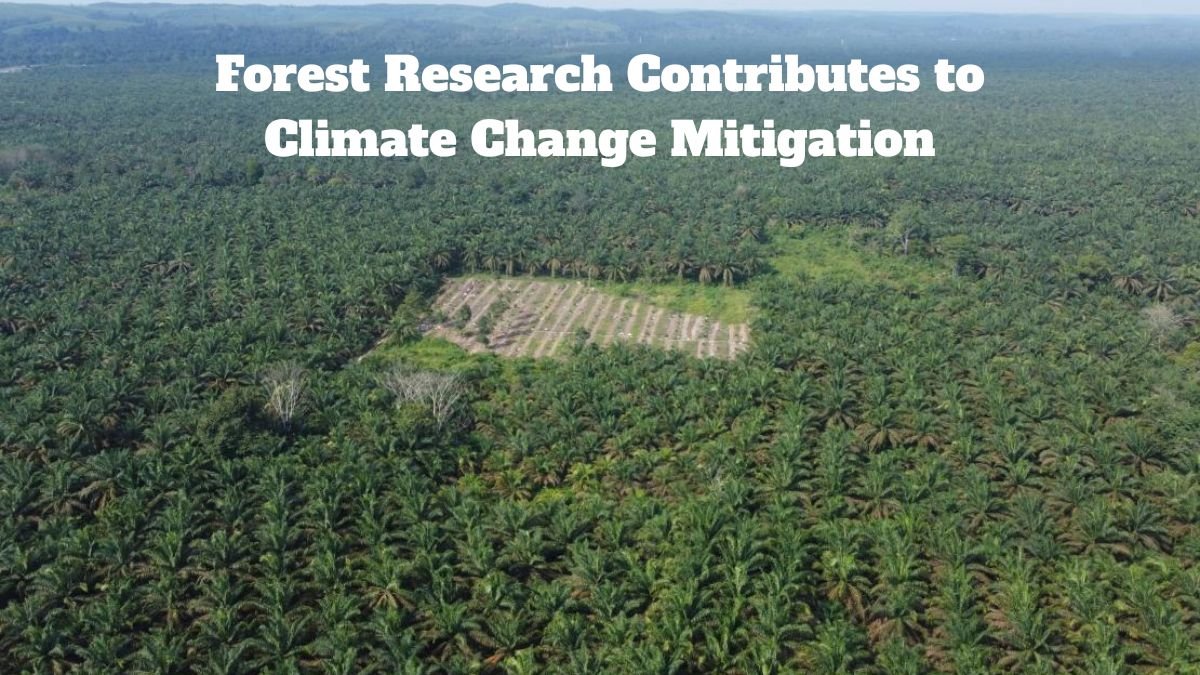
Climate change has become one of the most serious challenges facing the world today. Rising global temperatures, extreme weather events, melting glaciers, and biodiversity loss—all indicate that the Earth’s balance is being disrupted. In such times, forests and the scientific research associated with them (forest research) are playing a crucial role in mitigating climate change.
Forests are not just groups of trees; they are considered the “green lungs” of the Earth. They absorb carbon, regulate temperature, and maintain the balance essential for life. However, protecting these forests, managing them properly, and understanding their potential requires extensive forest research.
In this article, we will explore in detail how forest research helps mitigate climate change and why it is so crucial for future environmental strategies.
The Deep Connection Between Forests and Climate Change
The relationship between forests and climate change is profound and interconnected. Trees absorb carbon dioxide (CO₂) from the atmosphere and store it in their trunks, roots, and leaves. This process is called carbon sequestration, which helps reduce greenhouse gases.
However, when forests are cut down or wildfires occur, the stored carbon is released back into the atmosphere, accelerating climate change. Therefore, understanding which forests absorb more carbon, what type of management is most effective, and how climate change impacts forests—all of this is possible only through forest research.
What is Forest Research and Why is it Important?
Forest research is a scientific process that involves the in-depth study of forest ecology, tree growth, soil, biodiversity, water cycles, and climate impacts. This research helps governments, environmental organizations, and policymakers make informed decisions.
Without forest research, we cannot know which species are more resilient to climate change, which forests are better at carbon storage, or how damaged forests can be restored. This is why forest research is considered the backbone of climate action.
The Role of Forest Research in Carbon Storage and Sequestration
The most significant contribution of forest research is understanding and enhancing carbon storage. Scientists study which types of trees, at what age, and in which regions can absorb the most carbon.
Forest research also helps determine the differences in carbon sequestration capacity between natural forests and plantation forests. Furthermore, research explores how to conserve carbon stored in the soil, as soil is also a major carbon sink.
Based on these studies, governments can implement carbon offset projects, programs like REDD+, and international climate agreements.
Developing Climate-Resilient Forests
Climate change is altering temperature, rainfall, and weather patterns, directly impacting forests. Forest research helps understand which tree species can better withstand drought, floods, or heat.
Based on this research, scientists and forestry departments can develop climate-resilient forests that are capable of maintaining carbon absorption and biodiversity in the future. This strategy is crucial for long-term climate solutions.
The Role of Research in Preventing Deforestation and Promoting Reforestation
Deforestation is a major driver of climate change. Forest research helps identify the social, economic, and environmental factors behind deforestation.
Simultaneously, research identifies the most effective techniques and species for reforestation and afforestation. Trees planted without proper scientific information often fail to survive in the long term, while research-based plans yield sustainable results.
Forest Research and Policy Making
A significant contribution of forest research is in climate policy making. Data obtained from research is used by governments to formulate climate strategies at national and international levels.
Whether it’s the Paris Agreement or national climate action plans, the scientific evidence from forest research strengthens and makes policies more effective. This ensures that decisions are based on scientific facts, not emotions.
Local Communities and Sustainable Forest Management
Forest research is not limited to laboratories; it also involves local communities. Research shows that when local people participate in forest conservation, the results are more sustainable.
Sustainable forest management models balance local livelihoods, biodiversity conservation, and climate change mitigation—all three are essential. This balance is not possible without forest research.
The Growing Need for Forest Research in the Future
As the challenges of climate change intensify, the role of forest research is becoming increasingly crucial. New technologies such as remote sensing, satellite data, and artificial intelligence are making forest research more precise.
In the future, forest research will not only help mitigate climate change but will also be a key tool in maintaining the balance between humanity and nature.
Conclusion
Forest research is a silent yet powerful weapon in the fight against climate change. It helps us understand how to conserve forests, how to utilize them sustainably, and how to prepare them for the future.
Addressing climate change requires more than just slogans and plans; it demands scientific research, concrete data, and a long-term vision—and that’s precisely what forest research provides.
If we truly want a secure and balanced future, investing in and effectively utilizing forest research is essential. This is the path that will help us mitigate the effects of climate change and safeguard the planet for future generations.
