
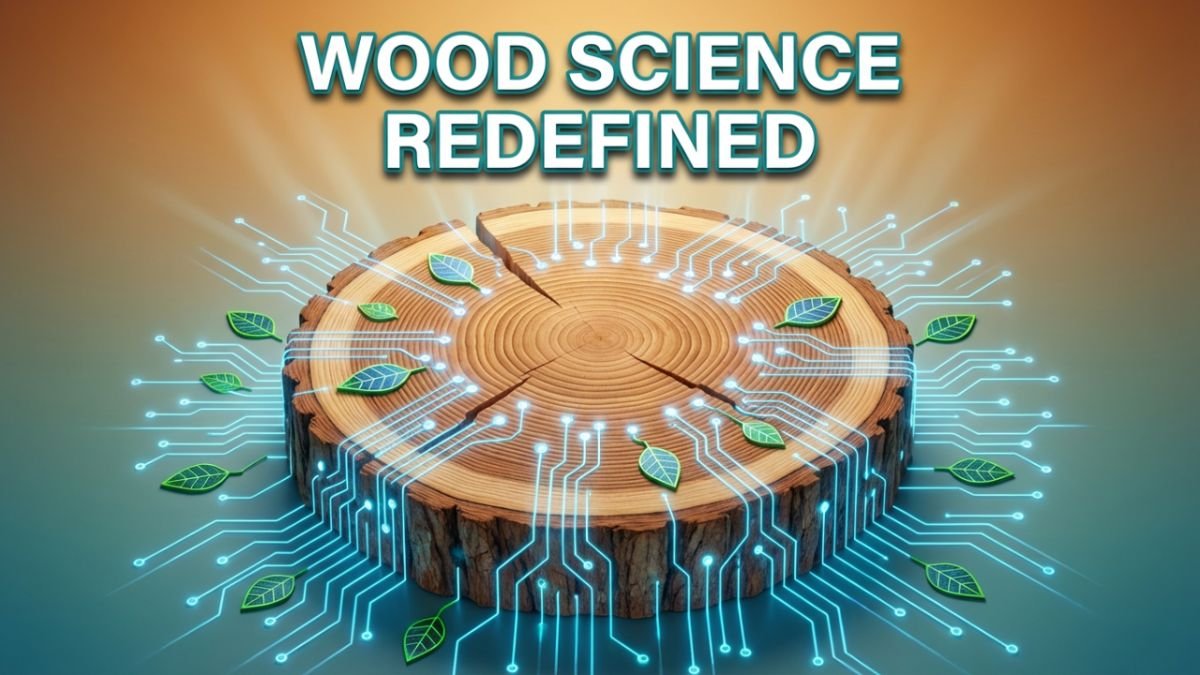
Future Trends in Wood Science Research: Wood science has long been considered limited to forestry, construction, and the furniture industry, but this field is now undergoing a major transformation. Artificial intelligence (AI), advanced manufacturing techniques of Industry 4.0 and 5.0, and the growing need for environmental sustainability have established wood as a “smart” and high-technology material. Modern research is no longer focused solely on wood’s strength or utility but on developing it as a carbon-storing alternative that can replace heavy carbon-emitting materials like plastic and steel. This is why the future of wood science is increasingly based on the convergence of technology, data, and sustainability.
AI and Machine Learning: The Digital Revolution in Forestry
The future of forestry will no longer be based on guesswork and manual decisions but on data-driven and predictive systems. AI and machine learning are completely transforming the forestry supply chain, now referred to as “Forestry 4.0 and 5.0.” AI-powered drones, satellite imagery, and IoT sensors can analyze forest health, tree growth, biodiversity, and disease status in real time. This leads to more accurate timber harvesting schedules and prevents unnecessary deforestation. Furthermore, machine learning-based systems can optimize wood cutting patterns in sawmills to minimize waste and maximize utilization. A significant trend is “human-in-the-loop” AI, where technology doesn’t replace human workers but makes their work safer and more efficient.
Nanotechnology and Advanced Engineering: The New Face of Wood
Wood science is no longer limited to traditional structural uses. Through nanotechnology and chemical modifications, wood is being transformed into high-performance materials. Innovations like transparent wood, created through special polymers and lignin modification, could become an environmentally friendly alternative to glass and plastic in the future. Furthermore, highly densified wood, created through partial delignification and high-pressure, high-temperature treatment, can become as strong as steel and revolutionize the construction industry. Nanoparticles are being incorporated into the porous structure of wood, leading to the development of “smart wood” with fire-retardant, antibacterial, and self-healing properties.
Wood as a Carbon Capture and Climate Solution
A key goal of future research is to make wood an active agent in combating climate change. Scientists are developing wood-based materials that can absorb carbon dioxide from the atmosphere. Specially engineered wood membranes and porous structures may be able to capture and store CO₂ for extended periods. This approach transforms wood from a passive building material into a “carbon capture technology.”
Steps Towards Sustainability and a Circular Bioeconomy
The future of wood science is deeply intertwined with the circular bioeconomy, where waste is transformed into resources. Low-value wood waste, sawdust, and bark are being converted into biochar or advanced bio-composites, increasing carbon storage capacity. Simultaneously, green, formaldehyde-free adhesives made from lignin, tannins, or mycelium are being developed to replace petroleum-based adhesives. Digital product passports and blockchain technology are being used to track the entire life cycle of wood, ensuring consumer confidence in products sourced from legal and sustainable origins.
Life Cycle Assessment and Environmental Impact
Modern wood science now considers not only the strength or aesthetics of a product but also its entire life cycle. Life Cycle Assessment (LCA) is being used to ensure that wood products leave a minimal carbon footprint from manufacturing to use and eventual disposal. This approach establishes wood as a long-term, environmentally friendly solution.
Future Challenges and Solutions
While all these advancements are promising, they also come with certain challenges. Developing reliable AI models requires large amounts of high-quality data, which is often limited in the forestry sector. Furthermore, establishing digital infrastructure and connectivity in remote forest areas is a significant challenge. From a social and ethical perspective, reskilling programs will be necessary to mitigate the impact of automation on employment and ensure that this transformation is inclusive.
Conclusion: A Smart and Green Future for Wood Science
The future of wood science is moving towards an era where wood will be viewed not merely as a natural resource, but as an advanced, intelligent, and climate-friendly material. Combined with AI, nanotechnology, and the circular economy, this field has the potential to not only transform industries but also play a crucial role in achieving global climate goals. Thus, the future of wood science is becoming a confluence of technology, sustainability, and innovation.
